การรันโปรแกรมในแบบ Administrator
การรันแบบปกติ ตอนรันโปรแกรมให้คลิกขวาไอคอนที่ต้องการรัน แล้วเลือก Run as administrator ตามภาพ
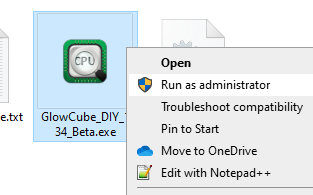
การรันแบบสร้าง Shortcut ตอนเปิดเครื่อง ในกรณีที่ต้องการสร้าง Shortcut ตอนเริ่มการทำงานด้วยในโฟลเดอร์ Startup หลังจากสร้าง Shortcut แล้วให้คลิกขวา แล้วเลือก Properties หลังจากนั้นเลือกตามภาพ

Iec 60076-5 -
Introduction
1. Finite Element Analysis (FEA)
Modern compliance begins with 3D electromagnetic FEA (e.g., using software like OPERA or ANSYS Maxwell). Engineers map leakage flux density across the entire winding height and compute local force vectors. Structural FEA then simulates winding displacement under peak loads. iec 60076-5
Dynamic Ability: Resilience against instantaneous electromagnetic forces that can reach hundreds of tonnes during fault current peaks. 2. Transformer Classification Introduction
1
IEC 60076-5 requires that the transformer remains structurally intact. This means no permanent deformation of the windings, no displacement of the clamping structures, and no loss of dielectric strength. Demonstration of Compliance: Testing vs. Calculation The calculation assumes an adiabatic process
Focuses on the transformer's capacity to handle the heat generated by a short-circuit current for a specific duration. Demonstration : Typically proven through calculation procedures
- Improved reliability and safety of power transformers
- Enhanced ability to withstand short circuits
- Better performance and reduced maintenance costs
The calculation assumes an adiabatic process. The standard provides specific formulas to calculate the final temperature of the windings based on the initial temperature and the duration of the fault. Designers must ensure that the insulation material—typically cellulose paper—does not exceed its critical temperature threshold to prevent premature aging or immediate failure. Ability to Withstand Mechanical Effects
The Twofold Nature of Short-Circuit Stresses
The standard categorizes short-circuit impacts into two distinct but interrelated phenomena: