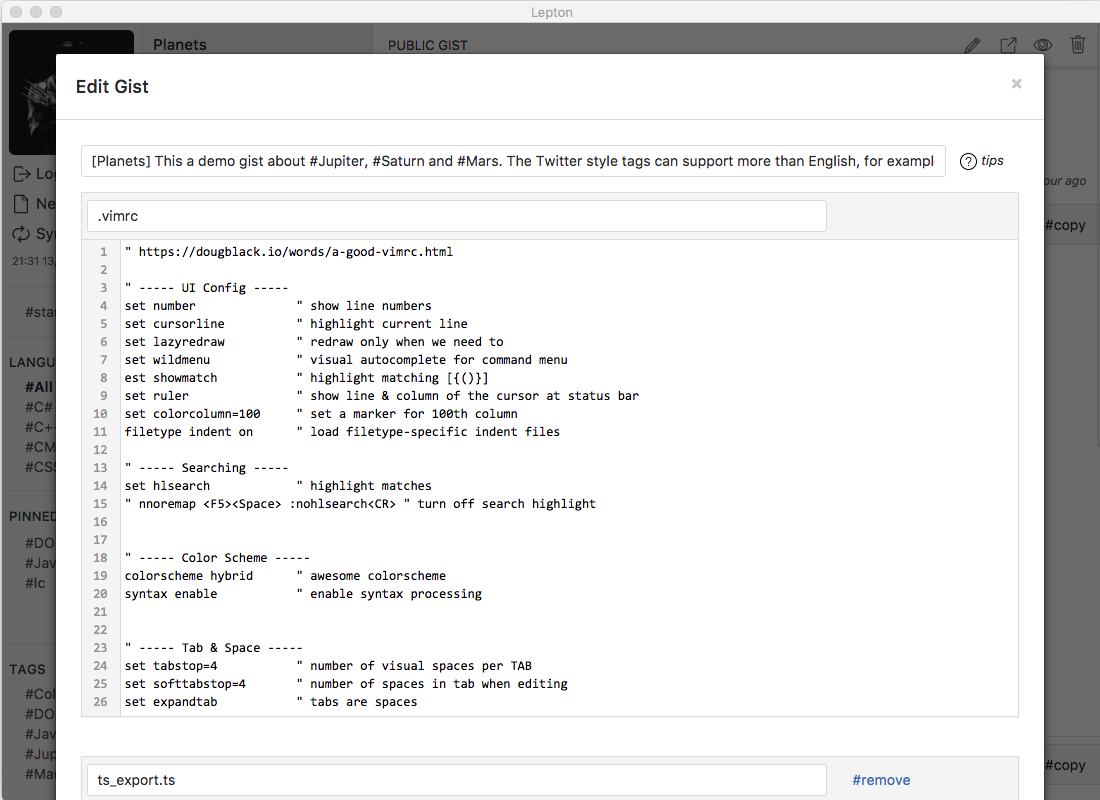
Stay Organized

Lepton provides a formatted description section with title and tags support.
You can group your gists based on their languages and custom tags.
Origin and History The Bilara Dog originated in Italy, specifically in the regions of Puglia and Campania. The breed has its roots in ancient times, with evidence suggesting that they were used as guard dogs, hunting companions, and even war dogs. Their name "Cane Corso" translates to "bodyguard dog" in Italian, which reflects their original purpose.
Do not manually express glands unless necessary. Over-expressing healthy glands can cause irritation and scar tissue. When to See a Vet Bilara Dog Anal Blog
Used only for chronic, untreatable cases, recurrent abscesses, or tumors. Risks include fecal incontinence (rate ~10–15% in medium breeds). Most Bilaras do NOT need this. Origin and History The Bilara Dog originated in
Origin and History The Bilara Dog originated in Italy, specifically in the regions of Puglia and Campania. The breed has its roots in ancient times, with evidence suggesting that they were used as guard dogs, hunting companions, and even war dogs. Their name "Cane Corso" translates to "bodyguard dog" in Italian, which reflects their original purpose.
Do not manually express glands unless necessary. Over-expressing healthy glands can cause irritation and scar tissue. When to See a Vet
Used only for chronic, untreatable cases, recurrent abscesses, or tumors. Risks include fecal incontinence (rate ~10–15% in medium breeds). Most Bilaras do NOT need this.